

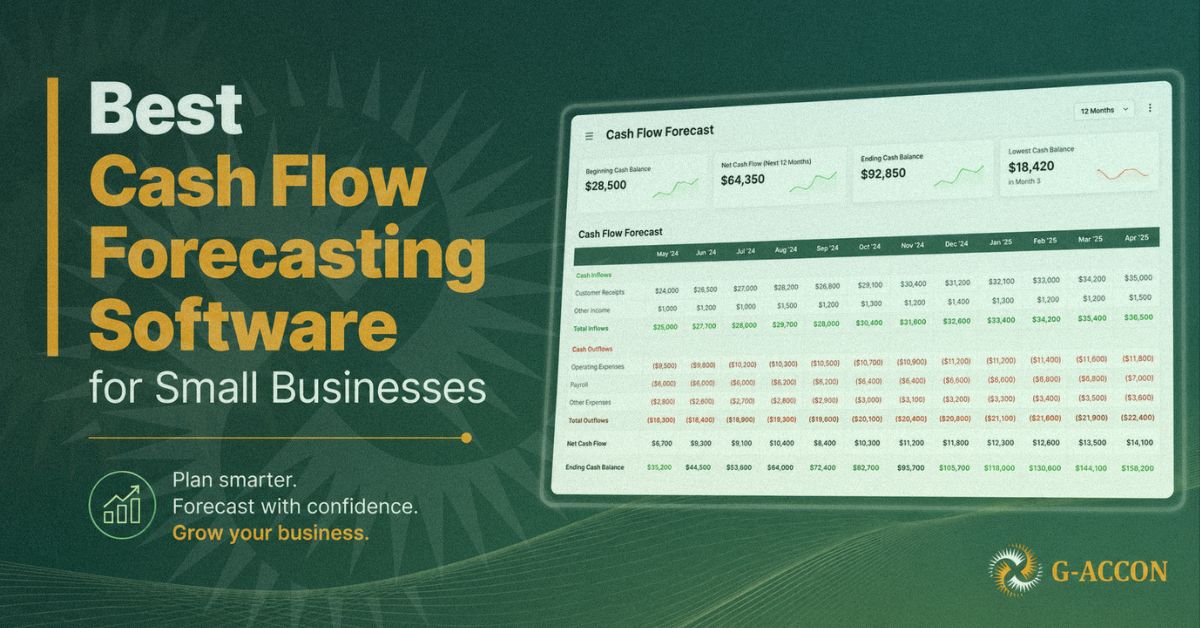
The best Cash Flow Forecasting Software helps small businesses see cash problems before they turn into real trouble.
Ask any small business owner what keeps them up at night, and it is rarely “not making sales.” It is the gap between money earned and money actually sitting in the bank. The invoice has been sent. The customer says the payment is coming. But rent, payroll, and supplier bills are due now. That is where even healthy businesses can start to feel pressure.
Cash flow forecasting helps close that gap. It shows what the next few weeks or months may look like before they arrive, so you can decide when to spend, hire, wait, or hold cash back. For years, the tools made this harder than it needed to be. Enterprise platforms were costly. DIY spreadsheets broke too easily. But today, small businesses have better options.
We reviewed six tools worth knowing, including what each does well, where it falls short, and who should use it.
How to Choose the Best Cash Flow Forecasting Software for Your Business
Before you look at a single price tag, answer one question: Do you want to watch your cash or plan it?
Some of these tools plug into your accounting software and show you a running picture of your cash position. Great for keeping an eye on the next few weeks. Others are built for building; you punch in assumptions and model what the next three years could look like under different decisions. That's the kind of thing a bank or investor wants to see.
Most owners lean one way. Figure out which, and the list below sorts itself out fast.
Prices reflect early 2026 and shift often; confirm on each vendor's site before you commit.
1. G-CashFlow: Best Cash Flow Forecasting Software for 3-Way Financial Projections
Best for small businesses that want detailed Profit & Loss, Balance Sheet, and Cash Flow forecasts inside Google Sheets.
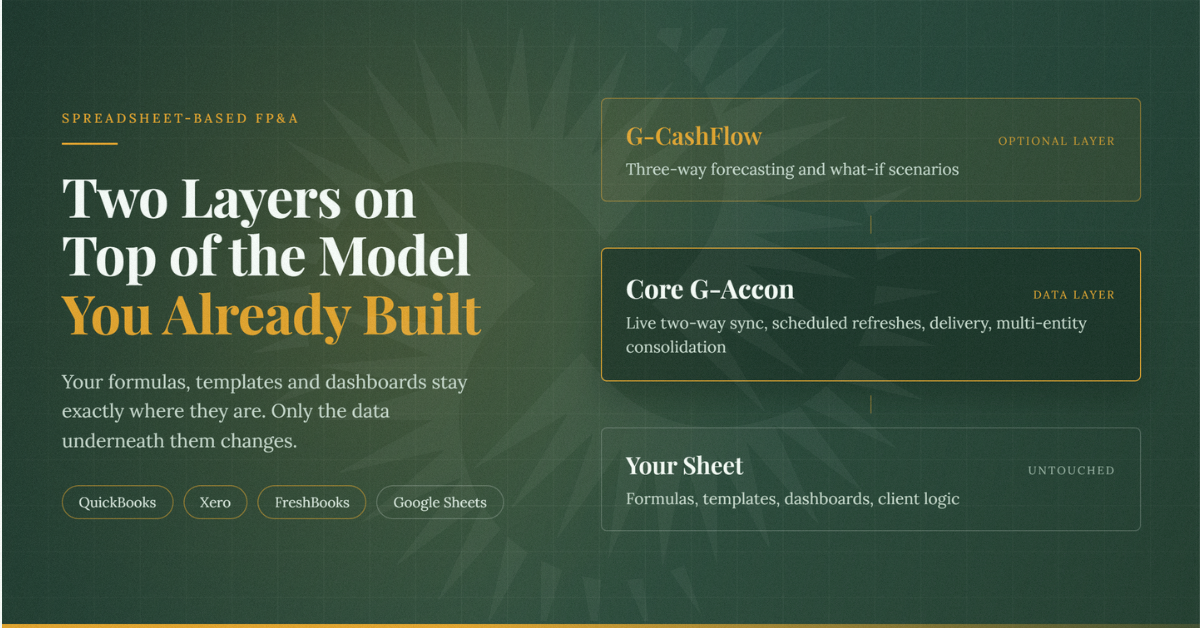
The thing that sets G-CashFlow apart is where it lives. It's a forecasting tool built straight into Google Sheets, so there's no new interface to learn. You already know how to use it.
Under the hood, it's a true 3-way model. That means it builds your Profit & Loss, Balance Sheet, and Cash Flow statement at the same time and keeps them wired together. Change an assumption in one place and the whole forecast updates. Nothing falls out of balance, and you're not chasing a broken formula across four tabs at midnight.
You start with a chart of accounts (there's a sensible default, or you customize it), enter your assumptions about income and expenses, and let it build monthly or quarterly forecasts up to five years out.
From there, you can run separate best-case and worst-case scenarios without wrecking your main forecast, track actual payment dates instead of lazy monthly averages, and import your current balances so you're forecasting from today rather than rebuilding history.
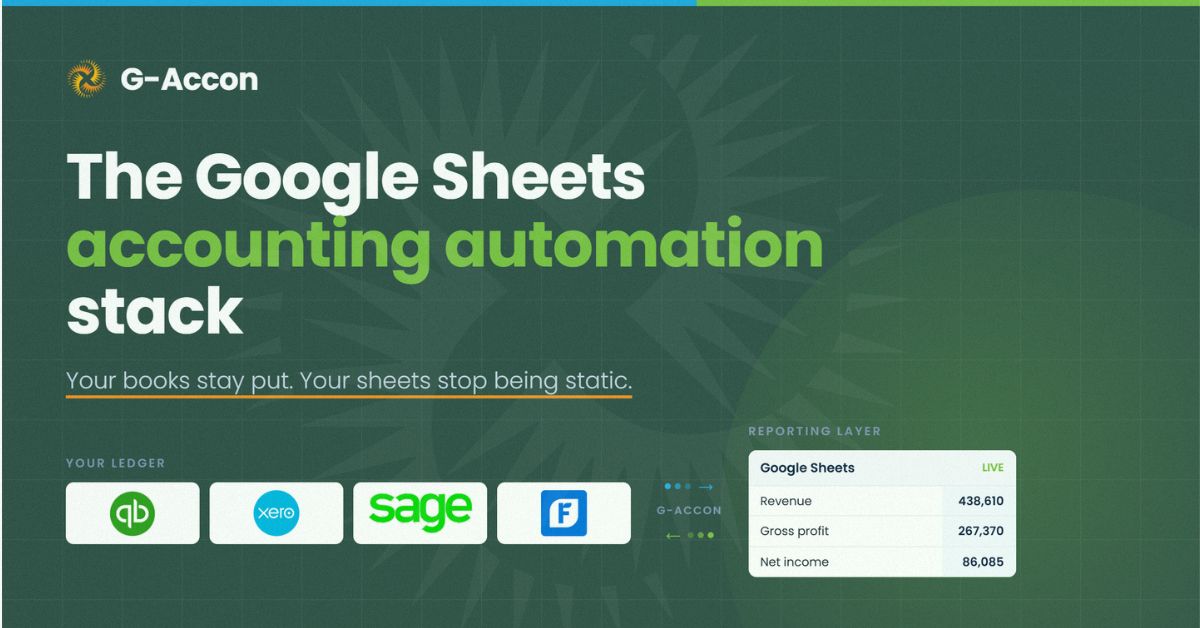
Because it's a Google Sheet, sharing is one click, and your data stays in your own Google account, not on someone else's server. And if you already run G-Accon to connect Sheets to QuickBooks, Xero, Sage, or FreshBooks, your real numbers can flow straight into the model.
Where it shines: building credible, detailed projections for a loan application, an investor deck, or a growth plan, especially if you're comfortable with spreadsheets.
The honest catch: it's assumption-driven, not a live bank feed. If what you want is a hands-off tool that auto-updates your cash position with zero input, that's a different kind of tool (keep reading). G-CashFlow rewards a little hands-on planning with a lot more depth.
It's free for 14 days, no credit card.
2. Float: Best Cash Flow Forecasting Software for Visual Cash Tracking
Best for business owners who want an automated, easy-to-read view of their future cash position.
Float is the tool to beat if you mainly want to see your cash, not model it from scratch.
It connects to Xero, QuickBooks Online, or FreeAgent, pulls in your invoices and bills automatically, and lays your projected bank balance out on a clean visual timeline. You can flip between daily, weekly, and monthly views and look up to three years ahead.
One genuinely useful touch: you can drag an invoice's expected payment date to when you actually think it'll land, and Float updates the forecast without messing with your accounting records.
It also handles "what-if" scenarios, so you can see what a new hire or a lost client does to your runway, and it'll flag a cash shortfall before it sneaks up on you.
Where it shines: owners who want automation and a picture they can read in five seconds.
The honest catch: reviewers consistently knock it on two points, it's effectively single-currency (rough if you operate across borders), and the report customization is thin. The sync can also lag now and then. Plans start around $50 a month, with a 14-day trial.
3. Fathom: Best Cash Flow Forecasting Software for Reporting and Forecasting
Best for accountants, advisors, and businesses that need strong financial reports alongside cash flow forecasts.
Fathom is really two products in one coat: a strong financial reporting tool and a three-way forecaster. That combination is why accountants and advisors love it.
The forecasting side covers P&L, Balance Sheet, and Cash Flow, with driver-based modeling and scenarios. But the reporting is the star, with over 50 pre-built KPIs, custom metrics, polished dashboards, and presentation-ready reports you can hand straight to a client or board. It connects to Xero, QuickBooks Online, and MYOB, and handles multi-entity consolidation if you've got more than one company to wrangle.
Where it shines: firms and businesses that care as much about explaining past performance as predicting the future.
The honest catch: all that reporting power is overkill if you just want a cash forecast, and it's more of a learning curve than the lighter tools. Pricing is tiered and quote-based rather than a simple flat fee, though there's a free trial.
4. Dryrun: Best Cash Flow Forecasting Software for Scenario Planning
Best for agencies, consultants, and project-based businesses that need to compare different cash flow outcomes.
Dryrun is built around one idea: scenarios. If your business runs on big, lumpy, project-based payments, this is the one that speaks your language.
You can model several futures side by side, compare them, and bring teammates in to contribute projections with proper version control and an audit trail. It leans more manual than the auto-sync crowd, which some people love, and others don't. The upside of manual is control; the downside is it doesn't plug as deeply into your accounts payable and receivable as a tool like Float.
Where it shines: agencies, consultancies, and contractors forecasting cash around specific client engagements.
The honest catch: the hands-on approach means more setup, and it's less of a fit if you want forecasting that just runs itself in the background.
5. Cash Flow Frog: Best Cash Flow Forecasting Software for Quick Forecasts
Best for small businesses that want a fast, automatic forecast from QuickBooks or Xero.
Cash Flow Frog earns its spot by being fast. Connect QuickBooks (Online or Desktop) or Xero, and it builds an automatic forecast from your history almost immediately. You tweak the line items to sharpen it, run what-if scenarios on things like payroll or a late-paying customer, and view anywhere from daily out to 36 months.
It's squarely aimed at smaller businesses, with pricing tied to your revenue. Plans start around $29 a month, and there's a free trial.
Where it shines: small businesses under about $1M in revenue that want a usable forecast today, not next week.
The honest catch: that simplicity becomes a ceiling once your finances get messy, multiple entities, tighter controls, and real treasury needs. It's a lightweight cash layer, not a full financial model. (Worth noting its strong review scores sit on a fairly small number of reviews.)
6. Pulse: Best Cash Flow Forecasting Software for Simple Cash Tracking
Best for freelancers and small teams that want a simple way to track money coming in and going out.
Pulse doesn't try to be your accounting system, and that's the whole point. It's a focused, no-frills cash flow planner, money in, money out, a clear view of where you stand.
It can work alongside Xero or run on its own, and you can get per-account insight if you juggle a few. For a freelancer or a small team that just wants visibility without a finance education, it does the job and gets out of the way.
Where it shines: solo operators and small teams who want simple over powerful.
The honest catch: "simple" cuts both ways. Outgrow basic tracking, and you'll hit its limits quickly. There's a 30-day trial, with plans from around $59 a month.
Best Cash Flow Forecasting Software for Small Businesses: Which Tool Is Right for You?
When choosing the best Cash Flow Forecasting Software for your small business, focus less on the marketing and more on how you actually manage money.
If you need full three-way projections in a tool you already understand, G-CashFlow is a strong fit, especially if you are preparing for a loan, investor pitch, or serious growth plan.
If you want an automatic, visual view of your cash position with less manual work, Float or Cash Flow Frog may be better options. If you need detailed reporting alongside your forecast, Fathom makes more sense. If your business runs on client projects and changing scenarios, Dryrun is worth considering. And if you only need simple cash tracking, Pulse keeps things basic.
Most of these tools offer a free trial, so you do not have to guess. Choose the one that fits how your business works, build your first forecast, and stop making cash decisions based on hope.
If you'd rather forecast inside a spreadsheet you already trust, start your free G-CashFlow trial and see what your next five years could look like.